
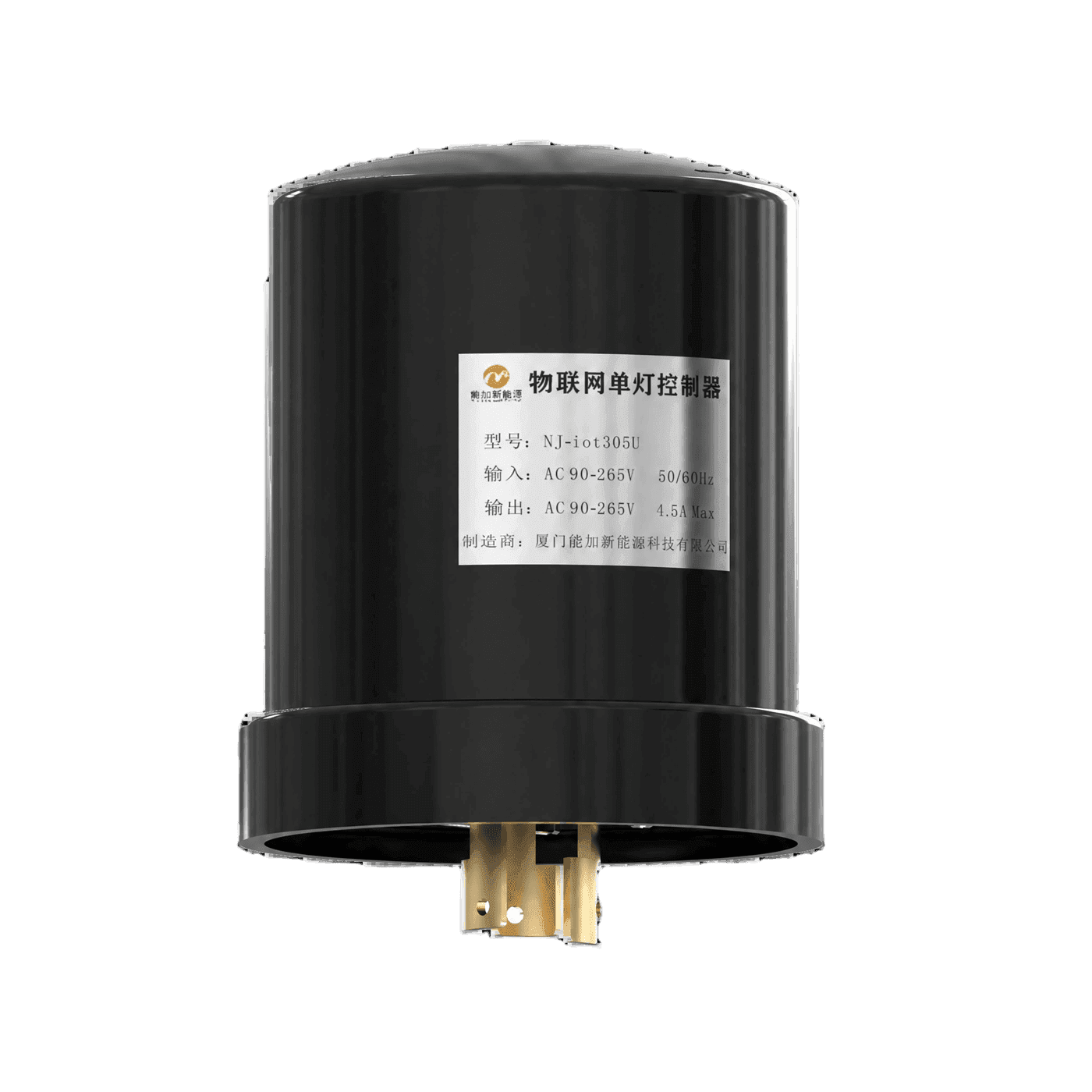
Smart Street Light Controllers
A street light controller adds remote switching, dimming and operating-status feedback at the luminaire. Select the socket and driver interface first, then choose a communication network and management workflow for your project.
Choose a street light controller for your installation
Luminaire and driver
Check whether the existing light uses a NEMA socket, a Zhaga connection or a wired control interface. Match the controller supply and dimming output to the actual LED driver; a radio label alone does not establish compatibility.
Cellular or gateway network
Compare the 4G Cat.1 NJ-iot305U with the LoRaWAN NJ-iot306L and Wi-SUN NJ-iot306W. Confirm carrier coverage or gateway coverage, regional configuration and the selected platform before ordering.
Operations and acceptance
List the switching, dimming, monitoring and alarm functions you need. Confirm model-level support and test commands, status feedback and the agreed offline behavior during a pilot.
Description
Lamp-level smart street light controllers for remote switching, dimming, metering, schedules, alarms, and cloud-managed outdoor lighting projects.
- Connectivity and interfaces: LCU, 4G Cat.1, NEMA, Zhaga, DALI, LoRa, Wi-SUN, MQTT
- Controller families covered: NEMA, Zhaga, DALI, 4G Cat.1, Wi-SUN, LoRa, and Sigfox single-lamp controller configurations
- Control: Remote on/off, 0-100% dimming, schedules, group commands, and scene policies
- Monitoring: Power metering, lamp status, communication status, operating records, and active fault alarms
- Interfaces: 0-10V, 1-10V, PWM, DALI, RS485, TTL, and cloud uplink options by project design
- Installation: Pole-mounted controller, luminaire socket, or cabinet-linked deployment for retrofit and new-build lighting projects
Specifications
Review the main configuration points for Smart Street Light Controllers, including control method, network, monitoring, interfaces, and deployment fit.
- Controller families covered
- NEMA, Zhaga, DALI, 4G Cat.1, Wi-SUN, LoRa, and Sigfox single-lamp controller configurations
- Control
- Remote on/off, 0-100% dimming, schedules, group commands, and scene policies
- Monitoring
- Power metering, lamp status, communication status, operating records, and active fault alarms
- Interfaces
- 0-10V, 1-10V, PWM, DALI, RS485, TTL, and cloud uplink options by project design
- Installation
- Pole-mounted controller, luminaire socket, or cabinet-linked deployment for retrofit and new-build lighting projects
Application scenarios
- Municipal street lighting retrofits that need lamp-level control without replacing every luminaire.
- New smart lighting projects where the controller type is selected around luminaire socket, dimming method, and network plan.
- Overseas B2B projects requiring cloud monitoring, alarm workflows, and flexible communication options.
Related products
NEMA Street Light Controllers | Smart Lighting Retrofit
NEMA socket street light controllers for fast retrofit projects, combining 4G Cat.1, Wi-SUN, LoRa, dimming, power metering, and fault reporting.
Solar Street Light IoT Controllers | 4G, LoRa, Wi-SUN, Zhaga
Solar street light IoT controllers for remote monitoring, parameter configuration, battery and charge/discharge data acquisition, dimming, and cloud platform integration.
Solar Zhaga Controllers | Solar Street Light IoT Modules
Solar Zhaga controllers for standardized solar street light integration, combining 4G Cat.1 or mesh communication with TTL/RS485 solar controller access and cloud monitoring.
Product buyer FAQ
What is Smart Street Light Controllers used for?
A street light controller adds remote switching, dimming and operating-status feedback at the luminaire. Select the socket and driver interface first, then choose a communication network and management workflow for your project.
Which specifications should I check before ordering?
Check the listed supply voltage, interfaces, communication network and regional configuration against your project requirements. Ask NetJoin to confirm any unspecified options or differences between document revisions.
Next steps
Share quantity, interface, communication method, location, and platform requirements so the engineering team can confirm fit.
Tell Us What You Need
Leave your email and a short message. We can sort out product model, quantity, and project details with you by email.
Product context: Smart Street Light Controllers