
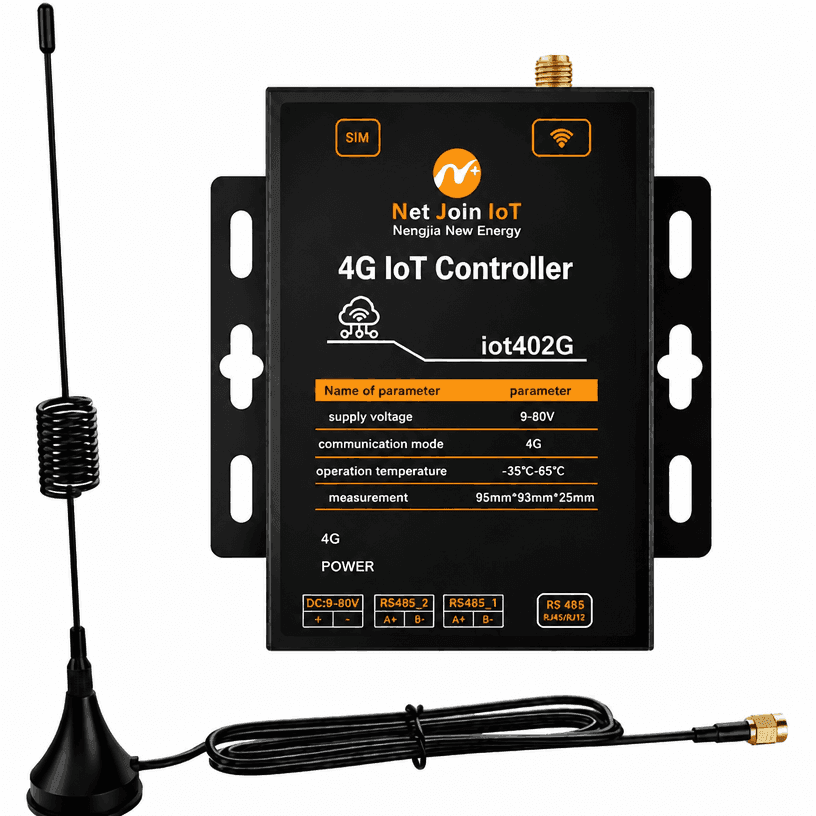
Solar Street Light IoT Controllers
Solar street light IoT controllers for remote monitoring, parameter configuration, battery and charge/discharge data acquisition, dimming, and cloud platform integration.
Description
Solar street light IoT controllers for remote monitoring, parameter configuration, battery and charge/discharge data acquisition, dimming, and cloud platform integration.
- Connectivity and interfaces: Solar, 4G Cat.1, LoRa, Wi-SUN, Zhaga, RS485, TTL, MQTT
- Controller families covered: 4G Cat.1, Zhaga, LoRa, Wi-SUN, and industrial RTU solar lighting controller configurations
- Solar data: Remote reading of parameters, operating status, charge data, discharge data, battery status, and controller alarms
- Interfaces: TTL, RS485, RS232, 0-10V/PWM, MQTT, TCP/IP, UDP, HTTP, and cloud platform integration options
- Power range: 3.2V, 12V, 24V, 48V, 5-45V, and 9-80V DC configurations depending on controller family
- Outdoor use: IP65/IP68 references, low-current operation, OTA upgrade options, and unattended solar street light operation
Specifications
Review the main configuration points for Solar Street Light IoT Controllers, including control method, network, monitoring, interfaces, and deployment fit.
- Controller families covered
- 4G Cat.1, Zhaga, LoRa, Wi-SUN, and industrial RTU solar lighting controller configurations
- Solar data
- Remote reading of parameters, operating status, charge data, discharge data, battery status, and controller alarms
- Interfaces
- TTL, RS485, RS232, 0-10V/PWM, MQTT, TCP/IP, UDP, HTTP, and cloud platform integration options
- Power range
- 3.2V, 12V, 24V, 48V, 5-45V, and 9-80V DC configurations depending on controller family
- Outdoor use
- IP65/IP68 references, low-current operation, OTA upgrade options, and unattended solar street light operation
Application scenarios
- Off-grid solar street light projects that need battery-aware maintenance and real-time controller data.
- EPC and distributor deployments where remote parameter configuration reduces field visits.
- Solar lighting systems that need 4G direct-to-cloud, LoRa/Wi-SUN mesh, or Zhaga fixture integration.
Product buyer FAQ
What is Solar Street Light IoT Controllers used for?
Solar street light IoT controllers for remote monitoring, parameter configuration, battery and charge/discharge data acquisition, dimming, and cloud platform integration.
Which specifications should I check before ordering?
Check the listed supply voltage, interfaces, communication network and regional configuration against your project requirements. Ask NetJoin to confirm any unspecified options or differences between document revisions.
Next steps
Share quantity, interface, communication method, location, and platform requirements so the engineering team can confirm fit.