
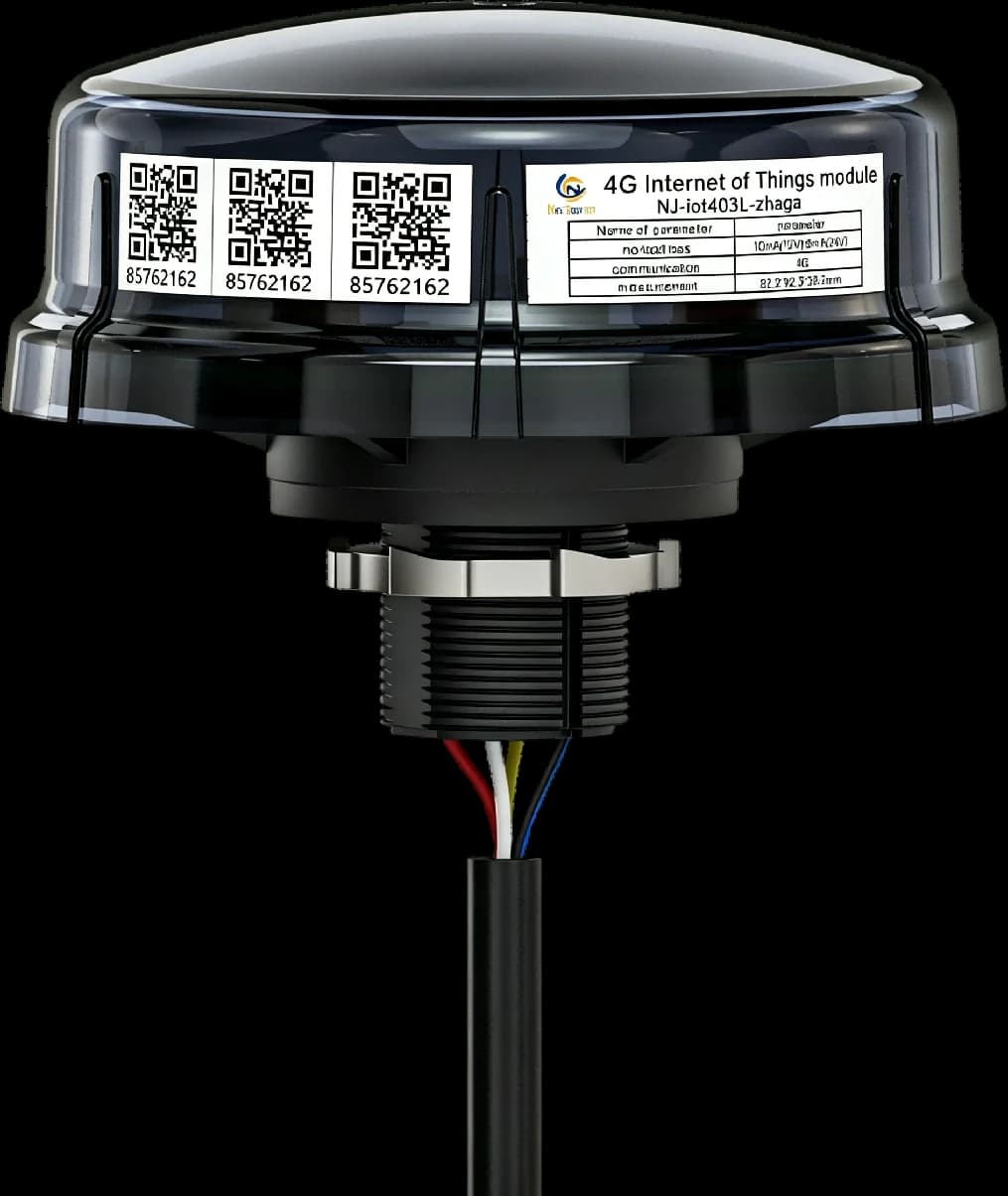
LoRa Zhaga Solar Light Controller
Item No.: NJ-iot403L-zhaga
LoRa Zhaga communication module for solar street light controllers, supporting remote load switching, power adjustment, battery/load/solar-panel monitoring and parameter configuration through TTL UART and RS485 interfaces. Works with a central controller that forwards field data to the cloud platform.
Description
LoRa Zhaga communication module for solar street light controllers, supporting remote load switching, power adjustment, battery/load/solar-panel monitoring and parameter configuration through TTL UART and RS485 interfaces. Works with a central controller that forwards field data to the cloud platform.
- Connectivity and interfaces: Solar, Zhaga, LoRa, Bluetooth, TTL, RS485, OTA, IP65
- Communication: LoRa
- Interface: Zhaga connector; TTL UART and RS485
- Supply voltage: 12 V / 24 V DC; 3.2 V option requires configuration confirmation
- No-load current: 10 mA at 12 V; 6 mA at 24 V
- Operating temperature: -35°C to +65°C
- Protection class: IP65
- Dimensions: 81.1 × 33.9 mm (as stated in the English datasheet)
- Net weight: Approximately 0.1 kg
- Remote control: Load on/off switching and load power adjustment
- Data monitoring: Battery, load and solar-panel voltage, current and power
- Fault alarms: Battery, solar-panel and load faults
- Parameter management: Remote query and configuration for individual devices or batches
- Remote maintenance: OTA firmware upgrades
- Management access: PC web platform and mobile app
- Operating frequency: 902–928 MHz; confirm compatibility with the deployment region
- Antenna: Built-in
- Local wireless interface: Bluetooth
- Network architecture: Node data acquisition with central-controller cloud uplink
Specifications
Review the main configuration points for LoRa Zhaga Solar Light Controller, including control method, network, monitoring, interfaces, and deployment fit.
- Model
- NJ-iot403L-zhaga
- Communication
- LoRa
- Interface
- Zhaga connector; TTL UART and RS485
- Supply voltage
- 12 V / 24 V DC; 3.2 V option requires configuration confirmation
- No-load current
- 10 mA at 12 V; 6 mA at 24 V
- Operating temperature
- -35°C to +65°C
- Protection class
- IP65
- Dimensions
- 81.1 × 33.9 mm (as stated in the English datasheet)
- Net weight
- Approximately 0.1 kg
- Remote control
- Load on/off switching and load power adjustment
- Data monitoring
- Battery, load and solar-panel voltage, current and power
- Fault alarms
- Battery, solar-panel and load faults
- Parameter management
- Remote query and configuration for individual devices or batches
- Remote maintenance
- OTA firmware upgrades
- Management access
- PC web platform and mobile app
- Operating frequency
- 902–928 MHz; confirm compatibility with the deployment region
- Antenna
- Built-in
- Local wireless interface
- Bluetooth
- Network architecture
- Node data acquisition with central-controller cloud uplink
Application scenarios
- Remote monitoring and control of compatible solar street light controllers.
- Zhaga fixture integration with TTL UART or RS485 communication.
- Solar lighting maintenance using operating data, fault alarms and remote parameter configuration.
Product buyer FAQ
What is LoRa Zhaga Solar Light Controller used for?
LoRa Zhaga communication module for solar street light controllers, supporting remote load switching, power adjustment, battery/load/solar-panel monitoring and parameter configuration through TTL UART and RS485 interfaces. Works with a central controller that forwards field data to the cloud platform.
Which specifications should I check before ordering?
Check the listed supply voltage, interfaces, communication network and regional configuration against your project requirements. Ask NetJoin to confirm any unspecified options or differences between document revisions.
Where can I find the product datasheet?
Use Download Datasheet on this page to review the supplied product document, including installation and configuration details.
Next steps
Share quantity, interface, communication method, location, and platform requirements so the engineering team can confirm fit.