
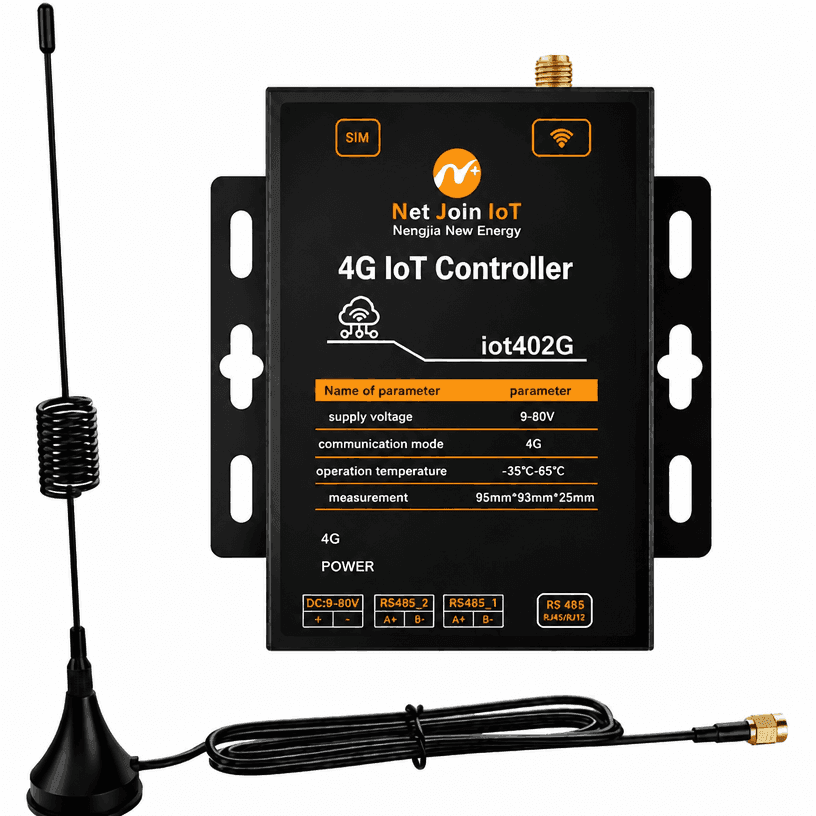
4G Solar Lamp Controllers
4G Cat.1 solar lamp controllers for cloud-connected solar lighting, enabling remote reading and writing of solar controller parameters, charge and discharge data, and operating status.
Description
4G Cat.1 solar lamp controllers for cloud-connected solar lighting, enabling remote reading and writing of solar controller parameters, charge and discharge data, and operating status.
- Connectivity and interfaces: Solar, 4G Cat.1, RS485, RS232, MQTT, TCP/IP, OTA, IP65
- Controller families covered: 4G Cat.1 solar lamp controller and 4G Cat.1 single-lamp solar controller configurations
- Solar data: Remote read/write of parameters and operating status including charge and discharge data
- Interfaces: RS485, RS232, MQTT, TCP/IP, and OTA upgrade options by configuration
- Power compatibility: 12V, 24V, and 48V solar controller systems with 5-45V references
- Deployment: Direct-to-cloud solar lighting projects where independent cellular connectivity is preferred
Specifications
Review the main configuration points for 4G Solar Lamp Controllers, including control method, network, monitoring, interfaces, and deployment fit.
- Controller families covered
- 4G Cat.1 solar lamp controller and 4G Cat.1 single-lamp solar controller configurations
- Solar data
- Remote read/write of parameters and operating status including charge and discharge data
- Interfaces
- RS485, RS232, MQTT, TCP/IP, and OTA upgrade options by configuration
- Power compatibility
- 12V, 24V, and 48V solar controller systems with 5-45V references
- Deployment
- Direct-to-cloud solar lighting projects where independent cellular connectivity is preferred
Application scenarios
- Solar street lights where each pole needs independent 4G cloud communication.
- Remote solar lighting maintenance where parameter adjustment and battery data reduce site visits.
- Overseas projects needing global or regional Cat.1 communication options.
Product buyer FAQ
What is 4G Solar Lamp Controllers used for?
4G Cat.1 solar lamp controllers for cloud-connected solar lighting, enabling remote reading and writing of solar controller parameters, charge and discharge data, and operating status.
Which specifications should I check before ordering?
Check the listed supply voltage, interfaces, communication network and regional configuration against your project requirements. Ask NetJoin to confirm any unspecified options or differences between document revisions.
Next steps
Share quantity, interface, communication method, location, and platform requirements so the engineering team can confirm fit.